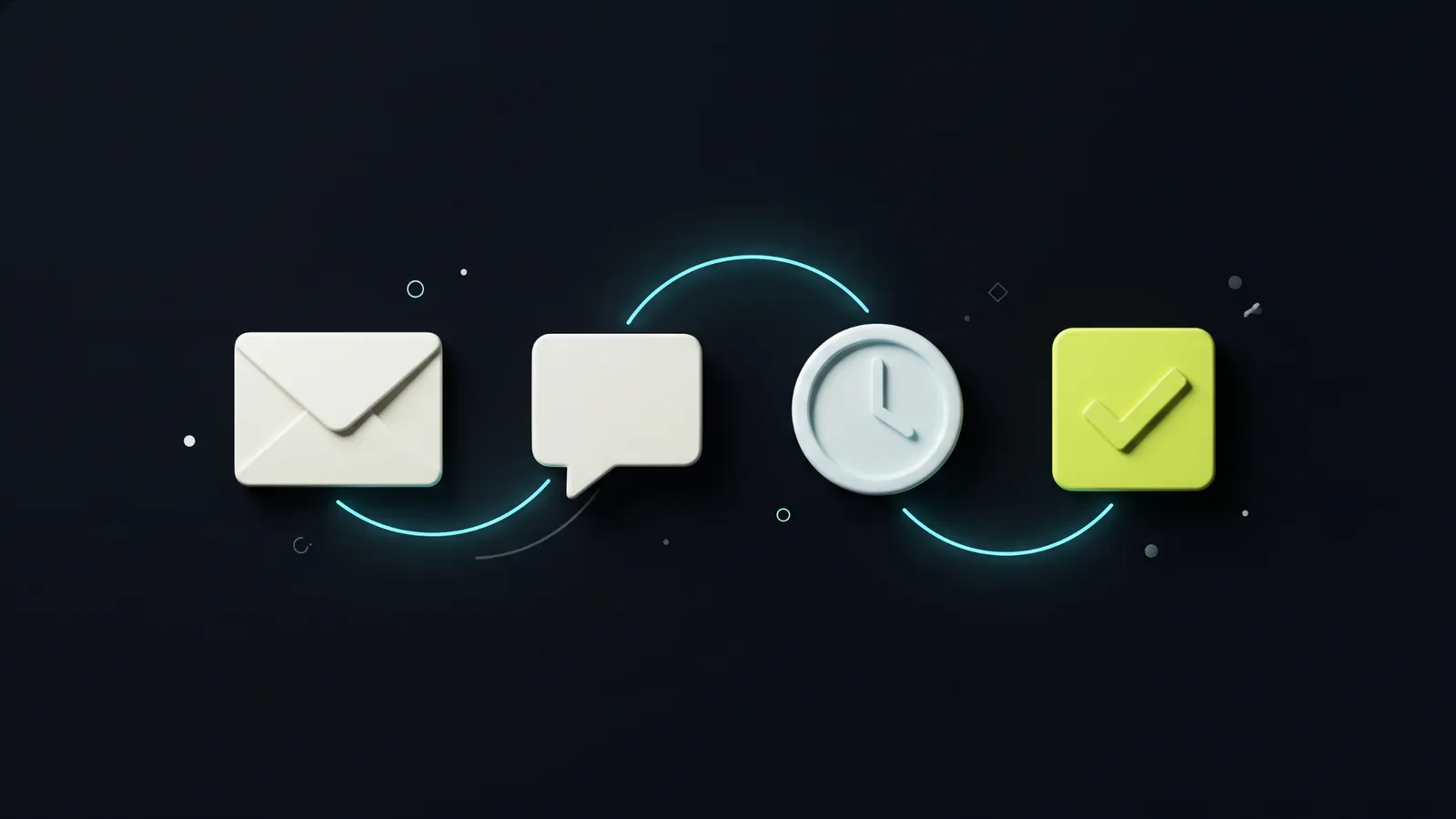
Most businesses do not lose leads because their offer is weak. They lose them in the quiet gap after the first message: the inquiry arrives, the team is busy, and the prospect hears nothing for a day. By then they have spoken to someone else. Follow-up automation exists to close that gap, but done badly it makes a business sound like a machine. This guide covers how to automate the routine parts and keep the human parts human.
Why follow-up fails in the first place
Follow-up usually fails for ordinary reasons rather than dramatic ones. Inquiries come in through several places, including a form, WhatsApp, email and the phone, and nobody owns all of them. Replies depend on who happens to be free. Reminders live in someone’s memory. Nothing records what has been sent, so the same person may be chased twice or never.
Automation fixes the consistency problem. It does not fix an unclear offer, and it cannot replace a real conversation with a serious buyer. The aim is to make sure every prospect gets a timely, relevant first response and a sensible next step, and that your people join the conversation at the right moment.
What to automate and what to keep human
A useful rule is to automate anything that is predictable and time-sensitive, and keep anything that needs judgment or empathy for people.
Good candidates for automation
- An immediate acknowledgement that confirms the inquiry was received and says what happens next.
- Basic qualification questions, such as what the prospect needs, their timing and the best way to reach them.
- Reminders before a scheduled call, to reduce no-shows.
- A gentle nudge when a prospect has not replied after a reasonable interval.
- Internal alerts that tell your team a high-intent lead is waiting.
Keep these human
- The conversation about price, scope and fit.
- Anything involving a complaint, a sensitive situation or a complex custom request.
- The final decision about whether a lead is worth pursuing.
Designing a follow-up sequence
Start from your sales process, not from a template. Write down the moments where prospects tend to stall, and place a message at each one. A simple sequence for a service business might look like this:
- Immediately: confirm the inquiry and set expectations for the next step.
- Within the hour or business day: a short personal-sounding message with a question or a booking link.
- A few days later, if there is no reply: a brief check-in that adds something useful, such as an answer to a common question.
- Before a scheduled call: a reminder with the time and what to prepare.
- After a proposal: a polite follow-up that asks if anything needs clarifying.
Exact timing depends on your buyers and sales cycle. A fast-moving consumer inquiry and a considered business purchase need very different rhythms, so test and adjust rather than copying someone else’s schedule.
Always build in stop conditions
The fastest way to lose goodwill is to keep messaging someone who has already replied. Every sequence should end automatically when a prospect replies, books a call, buys or asks to stop. It should also pause when a person on your team takes over the conversation. Stop conditions are not an optional extra; they are what separates helpful automation from spam.
Choose the channel your buyers actually use
Email, SMS and WhatsApp all work, but each has its own rules. In many markets customers prefer WhatsApp for quick questions, while others expect email for formal business. Respect each channel’s opt-in and messaging policies, keep messages short, and make it easy for people to reach a human or opt out. You remain responsible for the legal basis of your messaging in the countries you contact.
Measure what matters
Track a few simple numbers: how quickly the first response goes out, how many inquiries receive a reply, how many become booked calls, and where conversations stall. Tie each lead to its source so you can see which channels produce serious prospects. Review real conversations regularly. The wording that sounds fine in a draft often needs adjusting once real people respond.
Common mistakes to avoid
- Sending too many messages too quickly, which feels like pressure.
- Writing in a stiff, corporate tone that nobody would use in conversation.
- Automating before the sales process is clear, which simply speeds up confusion.
- Ignoring tracking, so nobody knows whether the sequence helps.
If you would like help mapping your own follow-up path, our free growth plan is a good place to start. We build follow-up automation, WhatsApp flows and marketing automation as part of connected growth systems for businesses worldwide.